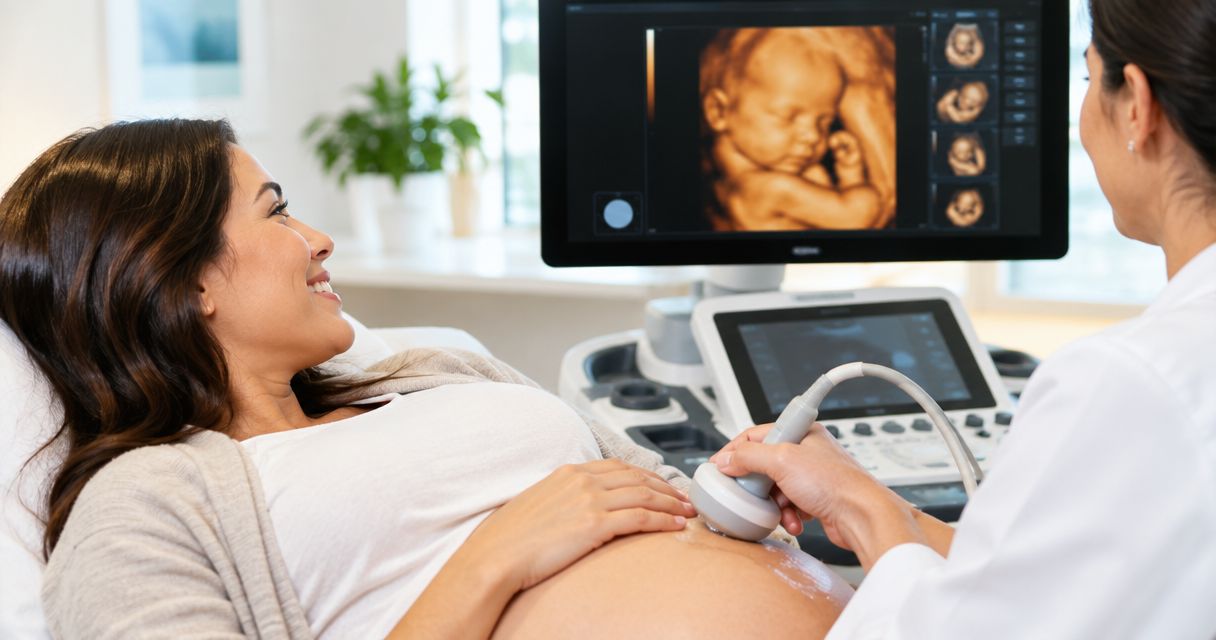

Ultrasound for LGBTQ+ family building journeys means the same anatomy, dating, and reassurance scans every pregnancy needs, plus a few extra steps: making sure both parents are listed on the chart, timing scans around a fertility clinic's release date, and getting parentage paperwork sorted before the images print. The gap between what a standard OB intake form assumes and what a two-mom, two-dad, reciprocal IVF, or surrogacy arrangement actually looks like is where most of the friction shows up in 2026.
- Ultrasound for LGBTQ+ family building journeys works best in a private setting that lists both parents on the chart, not just one.
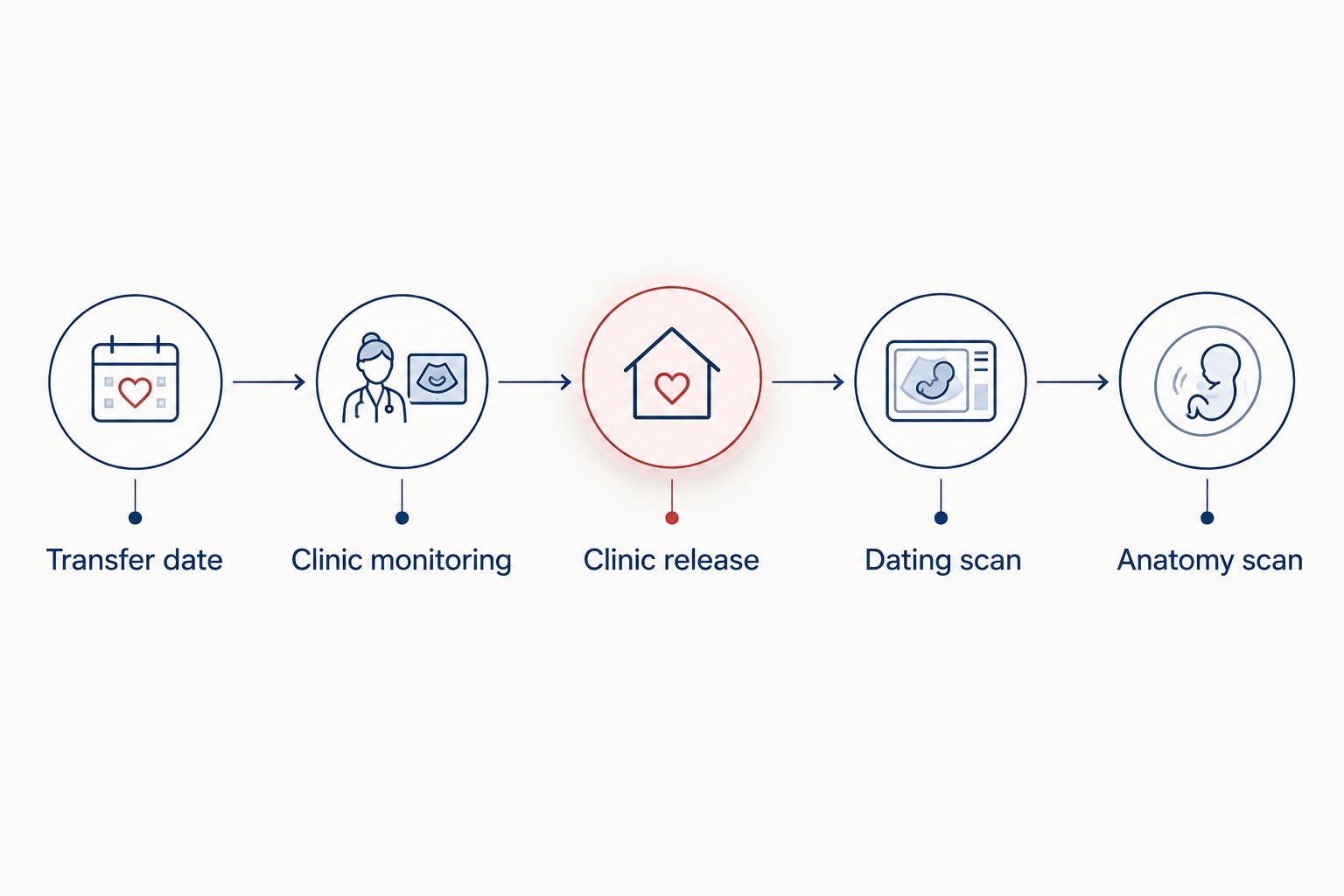
- IVF and reciprocal IVF patients typically get a dating scan around 6 to 8 weeks, then an anatomy scan at 18 to 22 weeks.
- Surrogacy arrangements need parentage documentation confirmed before the anatomy scan, not after the images print.
- The Ultrasound Concierge in Keller and Willow Park, TX welcomes both parents, donors, or surrogates into the same room.
- Hospital imaging centers can still work well, but ask about their single-patient intake policy before you book.
Why ultrasound matters for LGBTQ+ family building journeys
A dating or anatomy scan does the same clinical job for every pregnancy: confirms viability, checks growth, and screens anatomy at the standard windows. What changes for LGBTQ+ family building is who's in the room and what the paperwork assumes. Reciprocal IVF means the person carrying the pregnancy isn't the genetic parent listed on the embryo transfer record. Surrogacy means a gestational carrier's medical file and the intended parents' legal file are two different things that both need to line up correctly by delivery.
A concierge setting like The Ultrasound Concierge is built around one patient or one small group per appointment, which removes the waiting-room friction of a shared lobby form that only has space for one listed guardian. That matters more in fertility-built families than in a typical single-parent pregnancy, because there are simply more people who legitimately need to be in the scan room and on the chart.
Confirm your care team recognizes your family structure
Before you book the first scan, ask direct questions instead of guessing from a website's tone.
- Ask whether both parents can be listed as "parents" on file, not just one "patient" and a plus-one guest.
- Check whether the intake form has a field for two mothers, two fathers, or a non-biological parent, not only "spouse."
- Ask if a surrogate's medical information stays separate from the intended parents' records.
- Confirm the sonographer will address both parents directly and take questions from either one.
- Look for a written inclusive-care statement on the practice's site before you book anything.
Schedule monitoring and dating scans around your fertility protocol
Fertility clinic monitoring scans and OB or maternal-fetal medicine (MFM) scans run on different clocks, and the handoff between them is where gaps happen.
- Track when your fertility clinic's monitoring scans stop, usually after the 6 to 8 week transfer confirmation.
- Book a dating scan around 6 to 8 weeks if there's a gap between clinic release and your first OB appointment.
- For reciprocal IVF, schedule around the embryo transfer date, not the gestational carrier's last menstrual period.
- Ask your reproductive endocrinologist for a written release date so no scan window gets missed.
- Flag spotting or cramping between clinic release and your first OB visit instead of waiting for the next scheduled scan.
An early pregnancy ultrasound for IVF patients walks through exactly what that first dating scan checks and when insurance typically covers it versus when it's self-pay.
Line up parentage documentation before the anatomy scan
Getting a second parent's name onto medical and legal records is far easier before the anatomy scan prints than after.
- Talk to a family law attorney about second-parent or step-parent paperwork in Texas before the 18 to 22 week anatomy scan.
- Ask the facility how the report lists "patient" versus "parents," and whether a second parent's name can be added.
- For surrogacy, confirm which parent's name goes on the ultrasound file versus the surrogate's own medical record.
- Keep a copy of the gestational or reciprocal IVF agreement on hand in case a facility asks for verification.
- Ask early whether printed keepsake images can list both parents' names, not just the carrying parent's.
Bring your full support team into the room
A one-guest policy written for a typical prenatal visit doesn't account for how many people are legitimately part of an LGBTQ+ family building journey.
- Ask if the scan room fits a partner, a support person, or an existing child, not a strict one-guest rule.
- For surrogacy, clarify who attends: the surrogate, the intended parents, or all three, and how many the room seats.
- Ask if video call access exists for a partner who can't attend in person.
- Confirm whether existing kids can come along if a gender reveal moment matters to your family.
Book a private scan for your family
Concierge ultrasound appointments in Keller and Willow Park, TX built around who's actually in your family.
Plan reassurance scans on your own schedule
A reassurance scan exists precisely for the anxious stretch between OB-scheduled visits, and that stretch often feels longer after IVF or a prior loss.
- Book a reassurance scan when the wait between OB visits feels too long, especially after fertility treatment.
- Ask whether the scan is diagnostic (billed through insurance) or elective and self-pay before you book.
- For twin pregnancies from a double embryo transfer, ask about tracking each twin separately during the scan.
- Remember a reassurance scan supplements, but never replaces, your OB or MFM's diagnostic monitoring schedule.
Reassurance ultrasound scans cover how often those extra visits make sense and what they can and can't tell you medically.
Protect your privacy and your surrogate's or donor's privacy
Medical privacy questions get more complicated when a pregnancy involves a gestational carrier or donor gametes, and it's worth asking upfront rather than assuming.
- Ask how a private studio stores images and reports for a surrogate versus the intended parents.
- Confirm whether any social media or marketing policy exists for keepsake photos, if you don't want a bump photo publicly tied to a surrogate.
- Ask who owns the images and video before a 3D/4D or 8K scan appointment.
- Clarify how a gender-neutral request gets handled if you want a SneakPeek gender test result held separate from the ultrasound reveal.
A private ultrasound for surrogate pregnancies breaks down exactly how a gestational carrier's appointment and the intended parents' involvement typically get structured at a concierge studio.
Comparing your ultrasound options
| Option | Best for | Key limitation |
|---|---|---|
| Hospital-based imaging center | Complex or high-risk pregnancies needing a radiologist read | Often defaults to one listed "patient," so adding a second parent takes extra paperwork |
| OB/GYN in-office ultrasound | Routine monitoring inside an existing prenatal care relationship | Short appointment windows, less room for extended support people |
| Fertility clinic monitoring scans | Follicle tracking, transfer confirmation, early beta-to-ultrasound transition | Scans stop at clinic release, leaving a gap before OB scans start |
| Private concierge studio (The Ultrasound Concierge) | Reassurance scans, unhurried visits with the full family present | Not a substitute for diagnostic ultrasound ordered by an OB or MFM |
The Ultrasound Concierge is best for families who want a private, unhurried room where every parent, donor, or surrogate is treated as part of the visit, not an exception to the intake form.
Common mistakes LGBTQ+ family building patients make
- Assuming standard OB paperwork already lists both parents, when most forms have one line for "patient" and scramble to add a second name right before delivery.
- Waiting until after the anatomy scan to start the parentage conversation with an attorney, when it's far simpler to sort out beforehand.
- Booking a keepsake or gender reveal scan without asking the studio's privacy policy for a surrogate's or donor's medical information.
- Not asking the fertility clinic exactly when monitoring scans stop, leaving a gap with no scan at all between clinic release and the first OB visit.
- Choosing a studio based only on 3D/4D or 8K image quality and skipping the question of whether staff use correct pronouns and family terminology.
FAQ
What's the best ultrasound option for LGBTQ+ family building journeys in 2026?
A private concierge studio that lists both parents on intake and welcomes surrogates or donors into the appointment tends to fit best, alongside your OB or MFM's required diagnostic scans. The Ultrasound Concierge in Keller and Willow Park, TX structures visits around who's actually in the family, not a default single-patient form.
Is a reassurance ultrasound better than waiting for the next OB appointment?
A reassurance scan doesn't replace your OB's diagnostic schedule, but it fills the anxious gap between scheduled visits, especially after IVF or a prior loss. It's elective and typically self-pay rather than billed through insurance.
How early can a dating scan confirm a pregnancy after IVF?
A dating scan around 6 to 8 weeks after embryo transfer typically confirms fetal heartbeat and viability. That timing follows the transfer date, not a last menstrual period, which matters for reciprocal IVF scheduling.
When should intended parents in a surrogacy arrangement sort out parentage paperwork?
Before the 18 to 22 week anatomy scan, not after. Getting a second parent's name added to medical and legal records is far easier before images and reports print with only one name listed.
Can both parents attend an ultrasound appointment together?
Most private studios allow more than one support person in the room, but hospital-based centers sometimes limit visits to one guest. Ask about room capacity and video call access before booking.
Does a private ultrasound studio keep a surrogate's medical information separate from the intended parents' records?
Ask directly before booking, since policies vary. A private studio should be able to explain exactly how it separates a gestational carrier's file from the intended parents' file.
How many ultrasounds does a twin pregnancy from IVF typically need?
Twin pregnancies, especially from a double embryo transfer, usually need more frequent monitoring scans to track each twin's growth separately, on top of the standard dating and anatomy scans.
What questions should LGBTQ+ patients ask before booking an ultrasound?
Ask how the intake form lists parents, whether a surrogate's records stay separate, how many support people the room fits, and whether staff use correct family terminology. Those four questions catch most of the friction points in 2026.
One last thing
The single most overlooked step in this whole process isn't the scan itself, it's the paperwork trail that runs alongside it. Families who talk to a family law attorney before the 18 to 22 week anatomy scan, instead of after, consistently report less scrambling at delivery. Bring that conversation forward, not the scan.