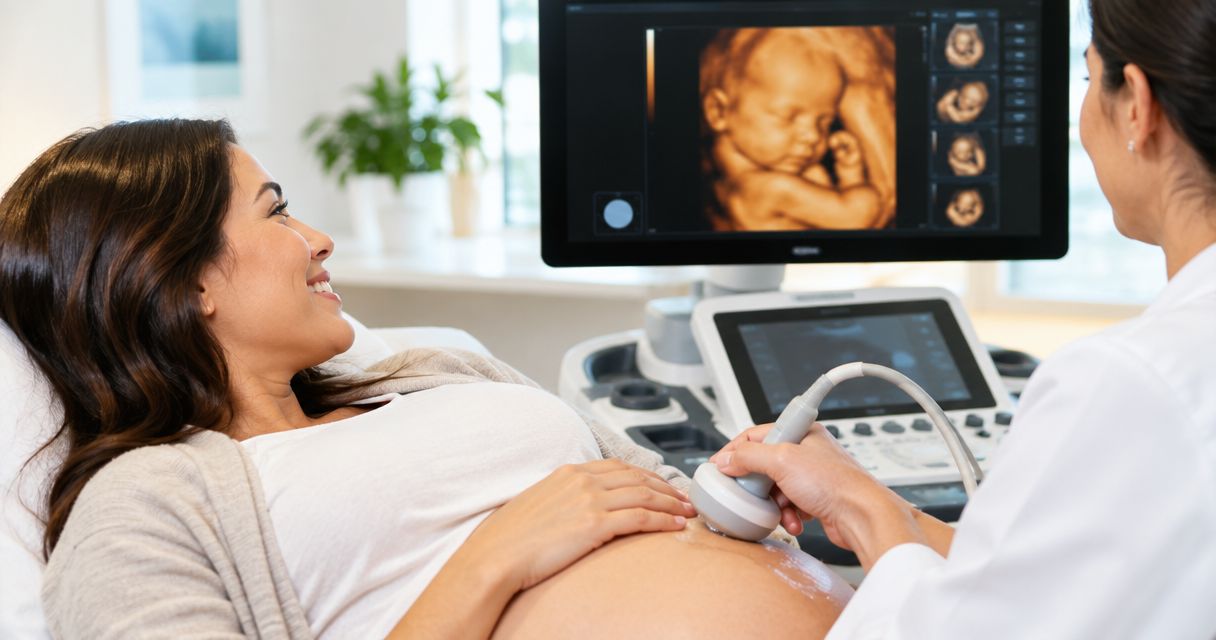

Private ultrasound for surrogate pregnancy is an elective imaging visit booked outside a gestational carrier's regular OB or maternal-fetal medicine appointments, scheduled specifically so intended parents and the carrier can see the baby together in a calm, non-clinical setting. Surrogacy arrangements add layers a typical pregnancy doesn't have: multiple decision-makers, distance between intended parents and the carrier, and a need for documentation everyone trusts.
- Private ultrasound for surrogate pregnancy supplements, never replaces, physician-ordered OB and MFM scans in 2026.
- The Ultrasound Concierge offers early confirmation, reassurance, and 3D/4D bonding scans for carriers and intended parents in Keller and Willow Park, TX.
- Set attendance and recording rules before the first visit to avoid conflict between the carrier and intended parents.
- Remote sharing (video call or recorded footage) matters more here than in a standard pregnancy because intended parents often live out of state.
- Keep a simple records folder from week one; legal teams and fertility clinics ask for scan documentation more often than expected.
Why this matters for surrogate pregnancies
A gestational carrier is not genetically related to the baby in most arrangements, which changes what "bonding" looks like and who needs access to imaging. Intended parents frequently live in a different city or state from their carrier, so a scan that happens once and disappears into a clinic's portal doesn't serve anyone well.
Surrogacy contracts and fertility clinic protocols also tend to specify a schedule of medical ultrasounds the carrier must attend — those aren't optional and a private studio doesn't substitute for them. What a private, concierge-style ultrasound visit adds is flexibility: scheduling around the carrier's work and travel, a private room instead of a shared waiting area, and imaging built for connection rather than diagnosis alone.
The setup that works
- Medical ultrasounds stay with the carrier's OB or reproductive endocrinologist, on their timeline
- Private ultrasound visits get scheduled around milestones both parties want to share
- Intended parents get a plan for watching remotely or receiving footage same-day
- Everyone agrees in advance who is physically in the room
Confirm your medical ultrasound schedule first
Before booking anything elective, know what your fertility clinic or OB already requires. Gestational carriers typically have an early viability scan, a dating scan, and later an anatomy scan ordered by a physician — those are diagnostic and non-negotiable in 2026 as they were before.
- Ask the fertility clinic for the full monitoring schedule in writing
- Note which scans are mandatory versus recommended
- Confirm which provider reads and stores the diagnostic results
- Mark dates on a shared calendar with intended parents
- Flag any gap where a private, elective scan could fit without conflicting
Add a private scan around week 12 for a shared first look
Many carriers and intended parents want a moment together that isn't rushed by a clinic schedule. A private studio visit around the 12-14 week mark, after viability is medically confirmed, gives both parties a slower, guided look at the baby without competing with a diagnostic appointment.
- Schedule after the medical dating scan, not instead of it
- Ask the studio whether early bonding and reassurance scans are offered separately from 3D/4D visits
- Confirm the visit length so intended parents traveling in can plan around it
- Bring the carrier's OB clearance if the studio requests it
- Check whether a private early pregnancy ultrasound visit is available on a weekend for out-of-town intended parents
Set clear rules on who attends and who's in the room
Surrogacy visits often involve more people than a typical pregnancy scan — the carrier, her partner, one or both intended parents, sometimes a case coordinator. Decide this before day one, not in the waiting room.
- Write down who is invited to attend in person
- Decide whether the carrier's other children or support people can be present
- Confirm the studio's room capacity and privacy policy
- Agree on whether photos or video get taken during the visit
- Put the agreement in the surrogacy contract or a simple written addendum
Arrange real-time or recorded sharing for intended parents who live elsewhere
Distance is the single biggest difference between surrogate pregnancy ultrasounds and standard pregnancy ultrasounds. Solve it with a plan, not a last-minute phone held up to a screen.
The manual option costs nothing: a video call on the carrier's or a companion's phone during the scan, with someone narrating what's on screen. It works, but connection quality and camera angle are unpredictable.
- Test the video call app and signal strength at the studio beforehand
- Ask whether the studio can screen-share or livestream the monitor directly
- Confirm whether recorded video or stills get sent digitally after the visit
- Set a backup plan (text updates, photos) if live video fails
- A studio offering a concierge diagnostic ultrasound experience built around remote family often has this workflow already in place, which is faster than coordinating it yourself each visit
Keep documentation organized for legal and medical records
Surrogacy arrangements generate paperwork fast — contracts, medical releases, insurance forms, and now scan images and reports. A single disorganized folder creates real delays when a legal team or fertility clinic asks for records.
- Start one shared digital folder before the first ultrasound
- Save every scan report, not just images, in the same place
- Label files by date and visit type (medical vs. elective/bonding)
- Confirm who has signed release rights to share images with intended parents
- Store a copy separate from the carrier's personal medical portal in case access changes
Choose a studio that understands surrogacy dynamics
Not every ultrasound studio is set up for the logistics of surrogacy — multiple stakeholders, remote viewers, and the emotional nuance of a carrier who isn't the baby's genetic parent. Ask before booking.
- Ask directly whether the studio has experience with surrogacy or gestational carrier visits
- Confirm they'll accommodate intended parents attending by video
- Check that staff use language that respects the carrier's role and the intended parents' relationship to the baby
- Ask about scheduling flexibility for out-of-town intended parents flying in for a single visit
“A private ultrasound doesn't replace the carrier's medical scans; it gives intended parents a shared moment their monitoring schedule was never designed to provide.”
Comparing your options for surrogate pregnancy imaging
| Option | Best For | Key Limitation |
|---|---|---|
| OB / maternal-fetal medicine visits | Required medical monitoring and diagnostic screening | Doesn't offer bonding time, 3D/4D imaging, or flexible scheduling for intended parents |
| Hospital-based imaging center | Physician-ordered anatomy scans | High-traffic, clinical setting with limited privacy control for surrogacy visits |
| Private concierge ultrasound studio (e.g., The Ultrasound Concierge) | Elective bonding, reassurance, and gender-reveal scans shared with intended parents | Not a substitute for physician-ordered diagnostic imaging |
| Mobile in-home ultrasound service | Carriers who prefer privacy at home or have travel limits | Availability and equipment vary by provider |
Verdict: for surrogate pregnancies in 2026, medical ultrasounds stay with the OB or MFM team, and a private studio like The Ultrasound Concierge fills the bonding and remote-sharing gap that clinical visits weren't built to cover.
Plan a surrogacy bonding scan
Coordinate a private visit that works for the carrier and out-of-town intended parents.
Common mistakes in surrogate pregnancy ultrasound planning
- Skipping the medical schedule to prioritize a bonding scan. The dating and anatomy scans ordered by the OB or fertility clinic are not optional, no matter how excited everyone is for a private visit.
- Not deciding attendance rules until someone shows up uninvited. Surrogacy visits involve more people than a typical pregnancy; agree on the guest list in writing.
- Assuming a phone call is enough for remote intended parents. A dropped connection during a first-look scan is a moment nobody gets back — test the tech in advance.
- Losing track of who has image-sharing rights. Without a clear release agreement, images can end up shared or withheld in ways that create friction between carrier and intended parents.
- Booking a studio that's never worked with surrogacy arrangements. Staff unfamiliar with the dynamic can unintentionally use language that centers the wrong parent in the room.
FAQ
What is private ultrasound for surrogate pregnancy?
It's an elective imaging visit booked outside the carrier's required medical appointments, used for bonding scans, reassurance scans, and shared moments with intended parents. It runs alongside, not instead of, physician-ordered OB and MFM ultrasounds.
How is a private studio ultrasound different from an OB ultrasound in a surrogacy?
An OB or MFM ultrasound is diagnostic and required by the fertility clinic's monitoring protocol. A private studio visit is elective, focused on 3D/4D imaging, reassurance, or gender reveal, and doesn't replace the medical scan schedule.
Can intended parents watch a private ultrasound during a surrogacy arrangement?
Yes, most private studios can accommodate intended parents in person or by video call during the scan. Confirm remote-viewing capability with the studio before booking, especially if intended parents live out of state.
Is private ultrasound for surrogate pregnancy safe in 2026?
Elective ultrasound uses the same imaging technology as diagnostic ultrasound and carries the same general safety profile when performed by trained staff. It should still follow, not replace, the medical monitoring schedule set by the carrier's OB or fertility clinic.
Who pays for private ultrasound during a surrogacy arrangement?
Payment arrangements vary by surrogacy contract and are typically negotiated between the intended parents and the carrier or agency. Check current details directly with the studio and the surrogacy agreement.
How early can a surrogate pregnancy be confirmed with private ultrasound?
Viability and dating are confirmed through the medically required early ultrasound ordered by the fertility clinic, typically before any elective visit is scheduled. A private early pregnancy scan can follow once the clinic confirms viability.
Can a private studio do a gender test for a surrogate pregnancy?
Studios offering SneakPeek Gender Tests can typically run them for surrogate pregnancies the same way as any pregnancy, based on the carrier's blood sample. Confirm timing and eligibility with the studio directly.
Does a private ultrasound studio replace my medical ultrasounds during surrogacy?
No. A private, concierge-style visit is an elective addition for bonding and reassurance; the carrier's OB or maternal-fetal medicine team still handles all diagnostic monitoring and required scans.
One last thing
The detail most surrogacy teams miss isn't the scan itself — it's the release paperwork. Decide in writing, before the first ultrasound, exactly who can request images and who can share them with the surrogacy agency, and put that decision in the same folder as the scan reports. It's a five-minute conversation in 2026 that prevents a genuinely awkward one in month seven.