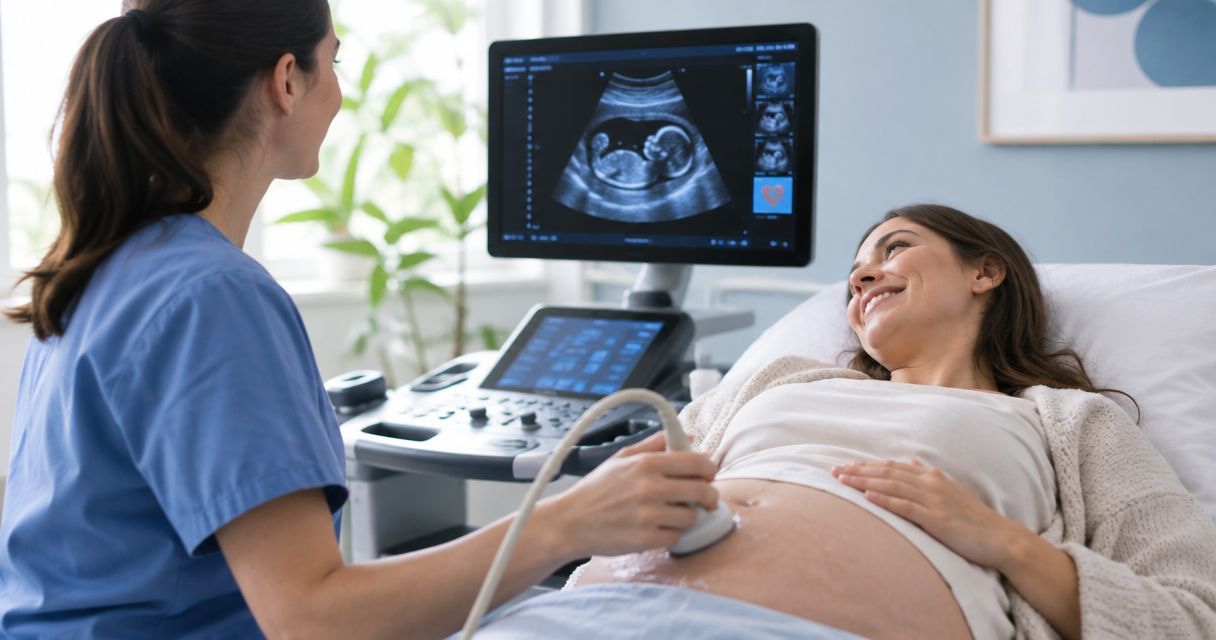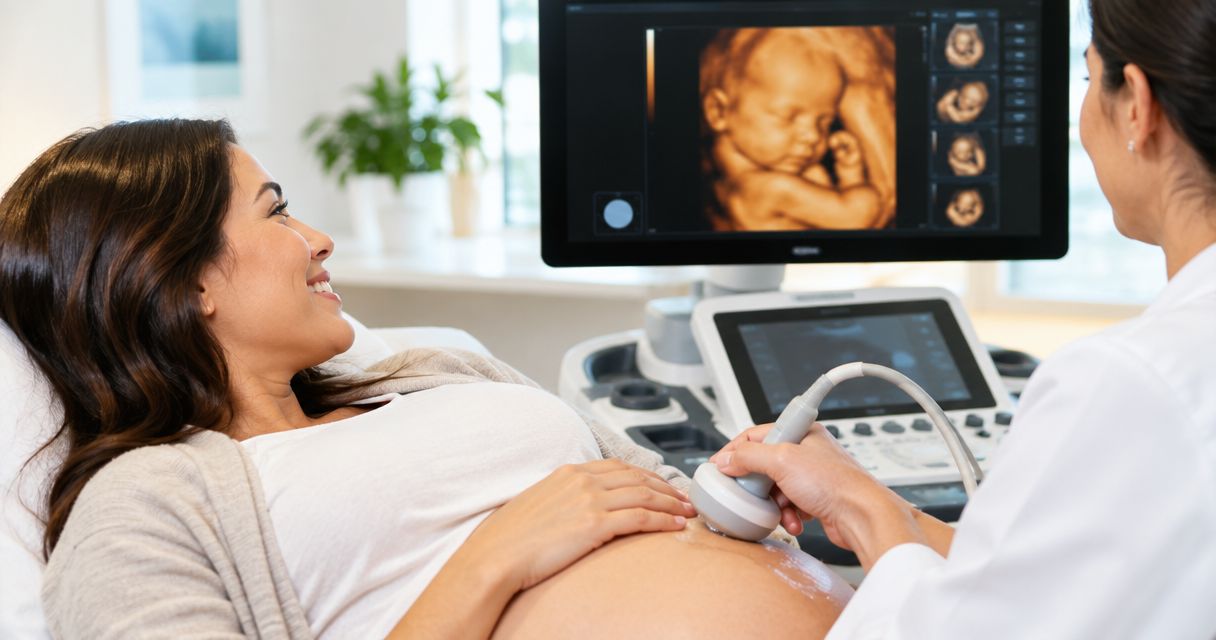
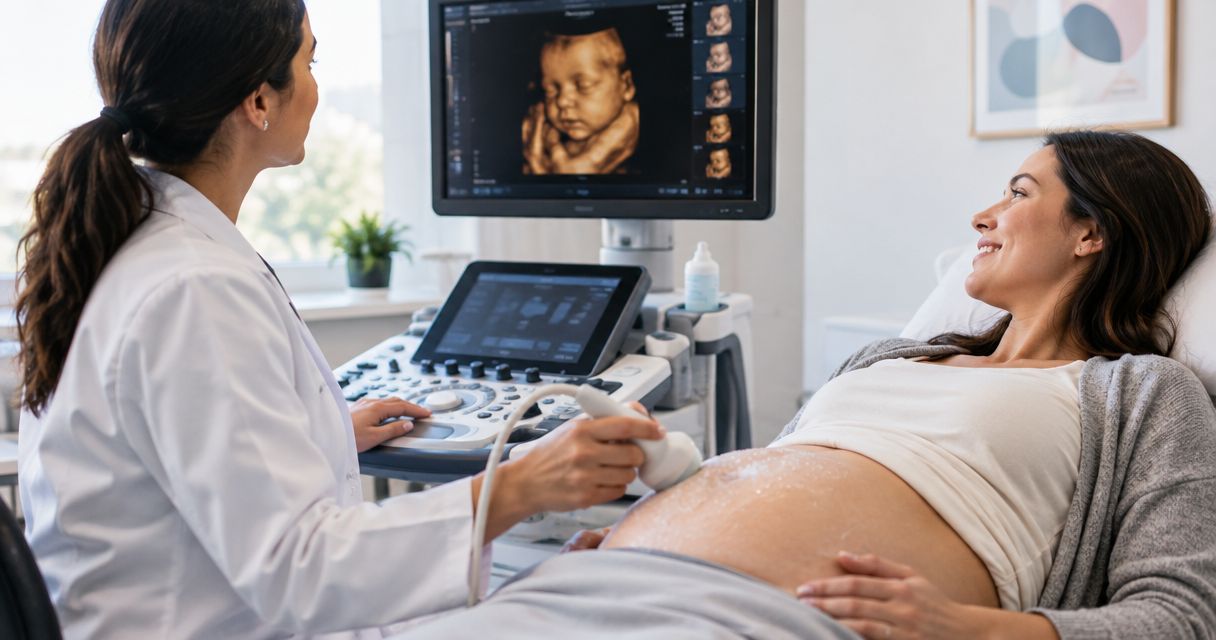
At 29 weeks pregnant, you are in a practical window for a 3D/4D ultrasound in 2026. For a session focused on facial images, plan around 28–30 weeks; 26–32 weeks gives you more scheduling flexibility. Timing does not guarantee a clear image: your baby’s position and what lies between the face and the ultrasound probe also matter.
- The best week for 3D/4D ultrasound is around 29 weeks; 28–30 weeks is a practical window for facial images.
- At 26–32 weeks, you have more scheduling flexibility, but a clear facial view is never guaranteed.
- A 3D/4D visit does not replace a prenatal anatomy scan or follow-up recommended by your clinician.
How many weeks pregnant should you be for a 3D/4D ultrasound?
Aim for 29 weeks if you can choose a single week. That puts you near the middle of the 28–30-week window often chosen for facial images, without treating any date as a guarantee. In 2026, the right appointment also depends on what you want to see and whether your prenatal clinician has recommended imaging for a medical reason.
For patients near Keller and Willow Park, The Ultrasound Concierge offers private 3D/4D ultrasound visits. Keep the purpose of that visit distinct from your scheduled prenatal care.
| Pregnancy timing | Best for | Advantage | Limitation |
|---|---|---|---|
| 18–22 weeks | An anatomy scan ordered as part of prenatal care | Your clinical team can assess fetal anatomy at the recommended stage | A keepsake facial image is a different goal |
| 26–27 weeks | Earlier view | You can plan a 3D/4D visit before the narrower facial-image window | The face can look different from a later-pregnancy image |
| 28–30 weeks | Facial detail | A practical target when facial images are your main goal | Position can still obscure the face |
| 31–32 weeks | Later view | You can still request a 3D/4D session | A clear facial angle can be harder to obtain |
| After 32 weeks | A later appointment when earlier timing is unavailable | You can ask a provider whether a session fits your goal | Timing alone cannot resolve a limited view |
These ranges are planning guides, not a measure of your baby’s health. If your prenatal clinician gives you a specific scan date, follow that clinical plan rather than moving it to match a keepsake-imaging window.
Why this matters
A 3D image shows a rendered surface view; 4D shows that view in motion. Neither label tells you whether the appointment includes a medical assessment. Before you book in 2026, ask what the session is intended to provide and who will interpret any finding that needs medical follow-up.
The American College of Obstetricians and Gynecologists describes the routine mid-pregnancy anatomy ultrasound as typically taking place at 18–22 weeks. That examination has a different purpose from scheduling a later visit for facial images. The U.S. Food and Drug Administration advises against ultrasound used solely to create keepsake images or videos; discuss the purpose of any additional scan with your prenatal clinician.
Which timing fits what you want to see?
18–22 weeks: prenatal anatomy assessment
Best for: a clinician-directed anatomy scan, not replacing one with a 3D/4D session. The 18–22-week window matters because your care team uses this examination to assess fetal structures. Ask your prenatal clinician which images and measurements the ordered exam needs, and keep that appointment even if you also want a private ultrasound later.
The advantage is clinical assessment as part of prenatal care. The limitation, if your goal is a facial keepsake, is that a clinical anatomy appointment serves a different purpose; an image you like is not the test’s measure of completeness.
26–27 weeks: an earlier 3D/4D view
Best for: someone who wants a session sooner and accepts that the appearance of the face changes through pregnancy. This timing sits inside the broader 26–32-week planning range. It gives you another option when a later appointment does not fit your schedule.
The trade-off is straightforward: an earlier image will not show exactly how your baby will look several weeks later. If a particular facial view matters more to you than an early appointment, choose the 28–30-week window instead.
28–30 weeks: the facial-image target
Best for: someone choosing a 3D/4D visit primarily to see facial features. If you have no scheduling constraint and want one date to plan around, choose 29 weeks in 2026. It is a planning recommendation, not a promise of a particular picture.
A hand over the face, the baby facing away or tissue between the probe and face can limit what you see on any day. A skilled session cannot make a baby change position on command, so ask what happens if the view is limited rather than assuming a particular image is included.
31–32 weeks and later: a possible visit, not a guarantee
Best for: someone whose schedule puts the visit later in pregnancy. A 3D/4D session can still be discussed after 30 weeks. The limitation is that the baby’s position and the available viewing angle can make a facial image harder to obtain.
Do not treat 32 weeks as a medical deadline or assume an appointment after it cannot produce images. Ask the imaging provider what the session can reasonably aim to show at your stage of pregnancy, then keep any separate medical scans your clinician recommends.
The Ultrasound Concierge is best for Keller and Willow Park patients who want a private 3D/4D ultrasound visit alongside—not instead of—prenatal care. Its private setting suits a personal visit; the limitation is that a 3D/4D keepsake goal cannot stand in for a clinician-directed anatomy assessment.
Why does the best week for a 3D/4D ultrasound vary?
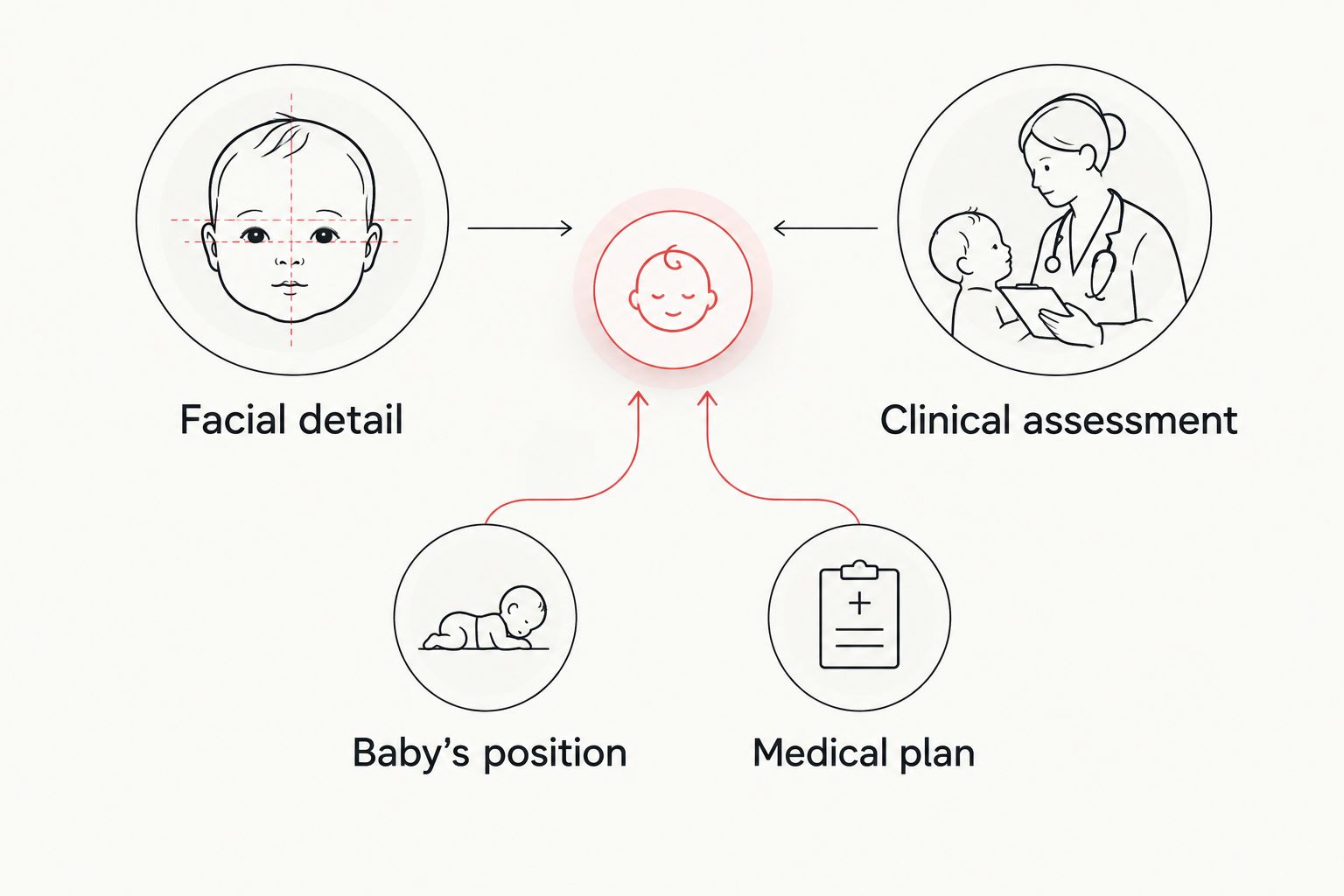
The calendar matters, but it is only one part of the image. These factors explain why two visits at the same gestational week can look different:
- Your baby’s position. A face turned away from the probe or covered by a hand is difficult to capture clearly. An appointment at 29 weeks does not override that position.
- What lies in front of the face. The placenta or nearby tissue can affect the available view. Ask the sonographer what is visible rather than drawing a health conclusion from an unclear keepsake image.
- The view available during the session. Ultrasound images depend on the angle available at that moment. A movement can change the view, but it cannot be scheduled.
- Gestational age. A visit at 26 weeks and one at 32 weeks show different stages of pregnancy. Choose the range that matches your image goal, not a supposed universal deadline.
- More than one baby. In a twin pregnancy, each baby’s position affects what can be seen. Discuss the goal for each baby with the imaging provider before choosing a date.
- Your medical plan. If your clinician needs a specific diagnostic ultrasound, that clinical timing takes priority over a preferred 3D/4D week.
These are reasons to set expectations, not reasons to diagnose a problem from a photo. If you have a concern about your pregnancy, contact your prenatal care team rather than using a private image session as a check.
How should you choose an appointment date in 2026?
Start with the reason for the scan. If you want a facial keepsake, target 29 weeks or choose a date within 28–30 weeks that fits your prenatal schedule. If your clinician ordered imaging to answer a medical question, use the date and type of exam your care team recommends.
Next, confirm your gestational age using the dating information from your prenatal clinician. Count from that established due date rather than estimating from how far along you feel. A booking made for the wrong week can change whether the visit matches your original goal.
Finally, ask the provider what the appointment includes. Does it focus on keepsake images, diagnostic assessment or both? Who reviews findings that need medical follow-up? What happens if your baby’s position limits the view? Clear answers matter more than a promise of a perfect facial image.
For a patient choosing a private visit near Keller or Willow Park, The Ultrasound Concierge provides 3D/4D imaging in a calm, personal setting. Its service is relevant when you want that experience; your prenatal clinician remains the point of contact for questions about an ordered medical examination or a pregnancy concern.
Can you schedule a 3D/4D ultrasound before your anatomy scan?
Yes, you can ask about a 3D/4D visit before 18–22 weeks, but it will not replace your anatomy scan. If your main goal is a facial image, waiting until around 29 weeks is the clearer planning choice. If your goal is to answer a medical question now, speak with your prenatal clinician about the appropriate exam instead.
The order of appointments does not change what each one is for. Bring questions about your pregnancy to the clinician responsible for your prenatal care, even if you also choose private imaging.
Is 32 weeks too late for a 3D/4D ultrasound?
No, 32 weeks is not an automatic cutoff for a 3D/4D ultrasound. It falls at the later end of the 26–32-week planning range, so ask the provider what views the session aims to capture. A face turned away from the probe can limit images at 32 weeks, just as it can at 29 weeks.
If your only available date is later, describe the result you hope for before booking. That gives you a decision based on the visit’s purpose rather than on a rigid week number.
When should you book if you are expecting twins?
Ask about timing before you reach the 28–30-week facial-image window. With twins, the position of each baby affects whether both faces are visible; no single week guarantees matching views. Tell the provider that you want to see both babies and ask how the session handles a limited view of either one.
Keep twin-pregnancy monitoring separate from that conversation. Your prenatal clinician sets the schedule for medically indicated scans; a private 3D/4D session does not change it.
FAQ
What is the best week for 3D/4D ultrasound in 2026?
Around 29 weeks is a practical target in 2026 if you want facial images. The 28–30-week window gives you room to schedule, but your baby’s position can limit the view.
Can I get a 3D/4D ultrasound at 26 weeks?
Yes, 26 weeks is within the broader 26–32-week planning range for a 3D/4D visit. If facial detail is your main goal and you can choose freely, consider 28–30 weeks instead.
Is 30 weeks good for a 3D/4D ultrasound?
Yes, 30 weeks is within the 28–30-week facial-image window. A clear image still depends on the view available during your appointment.
Is 32 weeks too late to see my baby’s face in 3D?
No, 32 weeks is not a fixed cutoff. The baby’s position and available viewing angle, rather than the week alone, determine what the session can show.
Does a 3D/4D ultrasound replace the 20-week anatomy scan?
No, a 3D/4D keepsake visit does not replace a clinician-directed anatomy scan. The routine anatomy ultrasound typically takes place at 18–22 weeks and has a different purpose.
Can a 3D/4D ultrasound tell me whether my baby is healthy?
A facial image cannot establish whether your baby is healthy. Ask your prenatal clinician which diagnostic examinations address your concern and who will review the results.
Why can’t I see my baby’s face clearly at 29 weeks?
A 29-week appointment cannot guarantee a clear facial view. Your baby’s position, a hand near the face or tissue between the probe and face can affect the image.
One last thing
The best date for a facial image is not automatically the best date for a medical scan. In 2026, use 29 weeks as a planning target for a 3D/4D visit, and let your prenatal clinician set the timing of clinical imaging. The Ultrasound Concierge is an option for a private pregnancy ultrasound near Keller and Willow Park, not a substitute for that clinical plan.