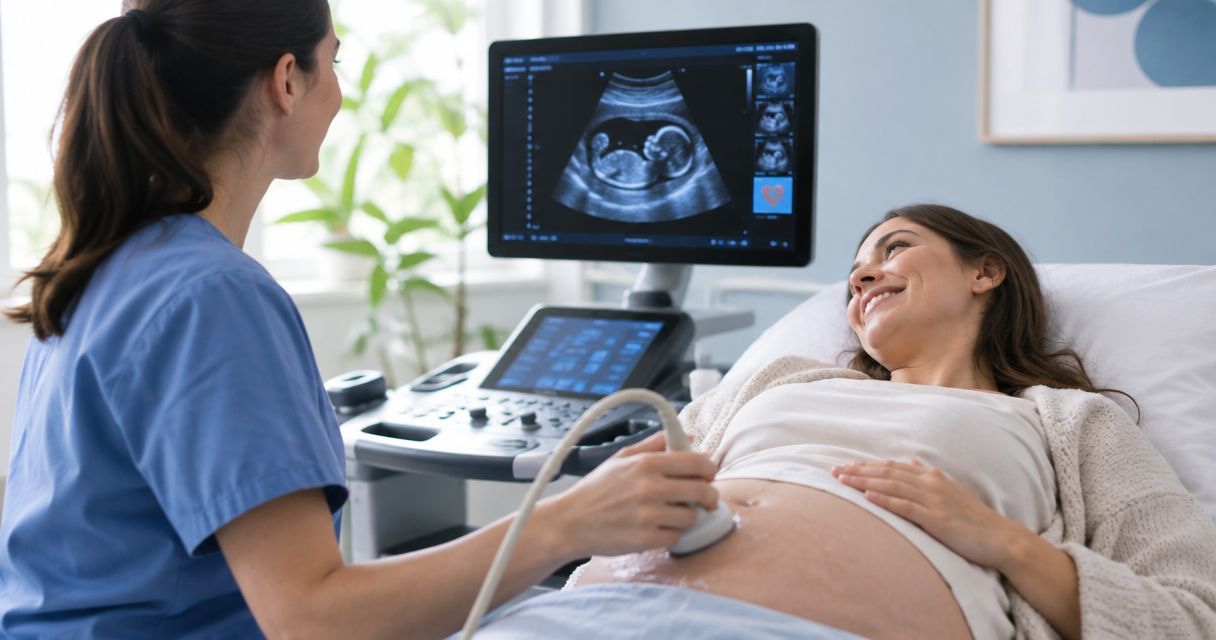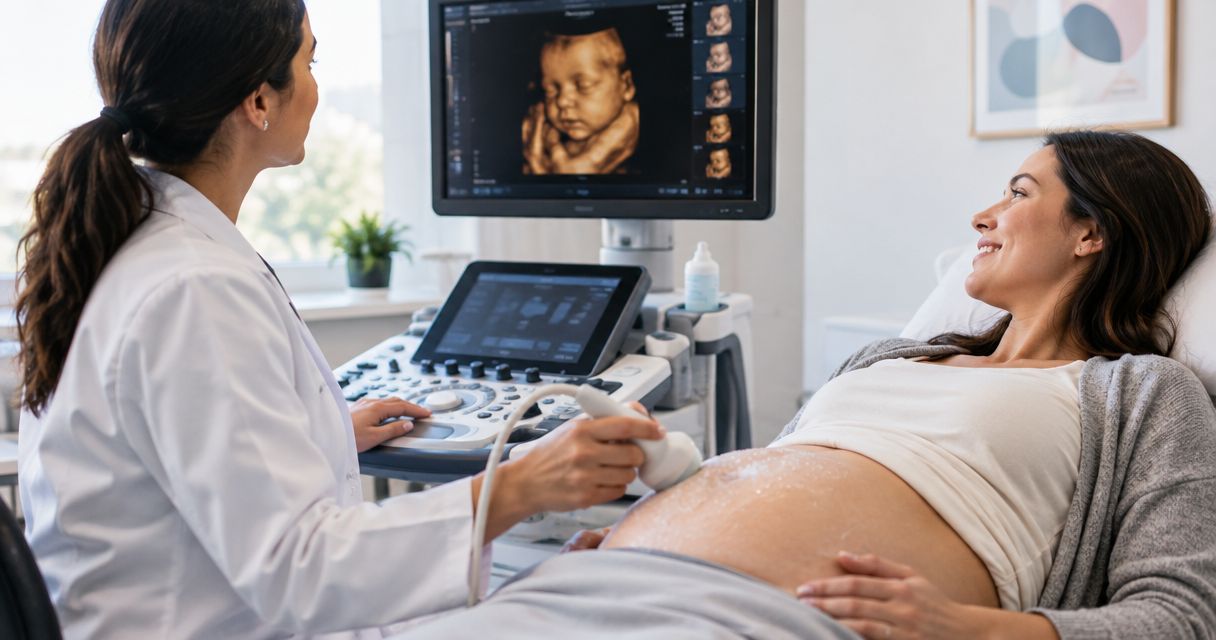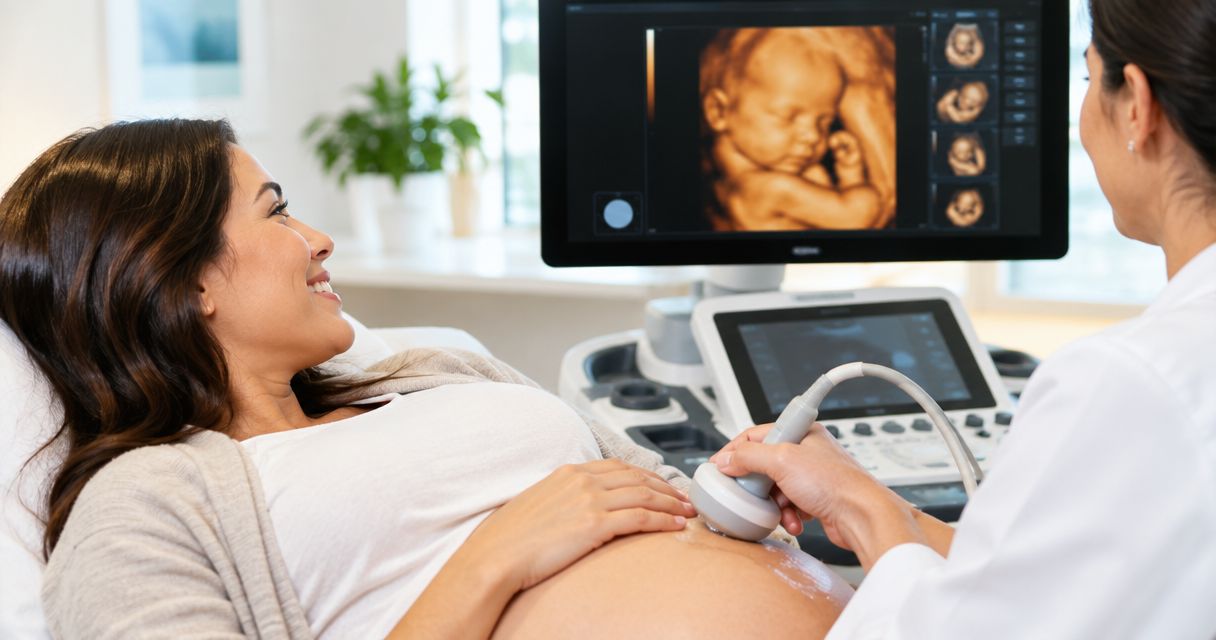
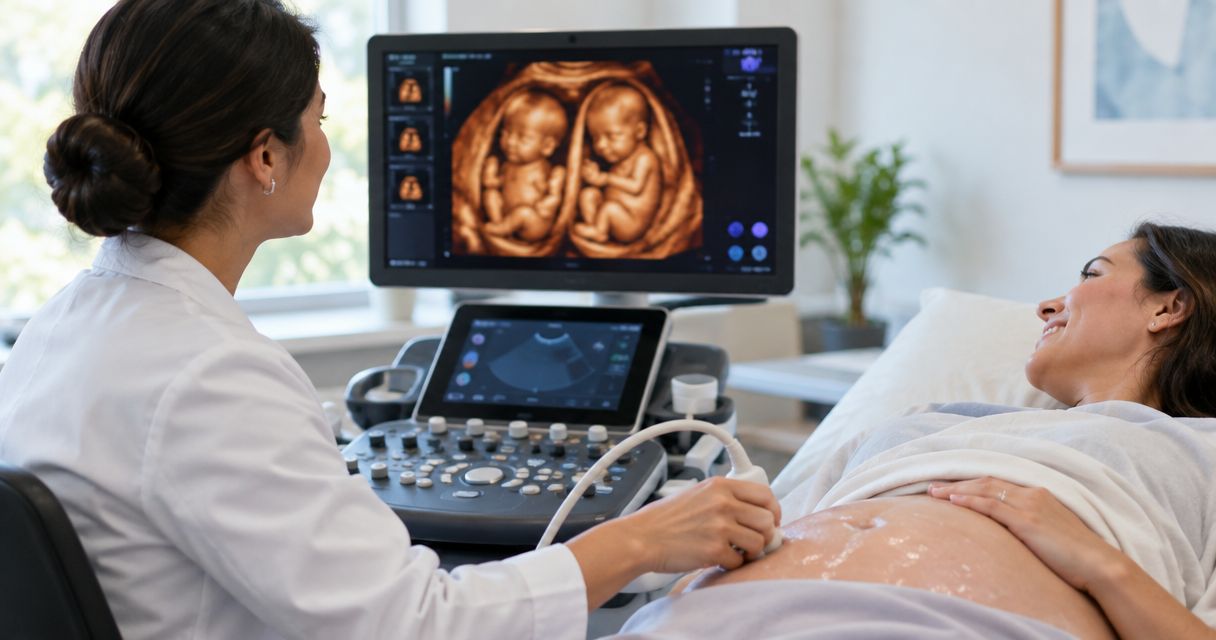
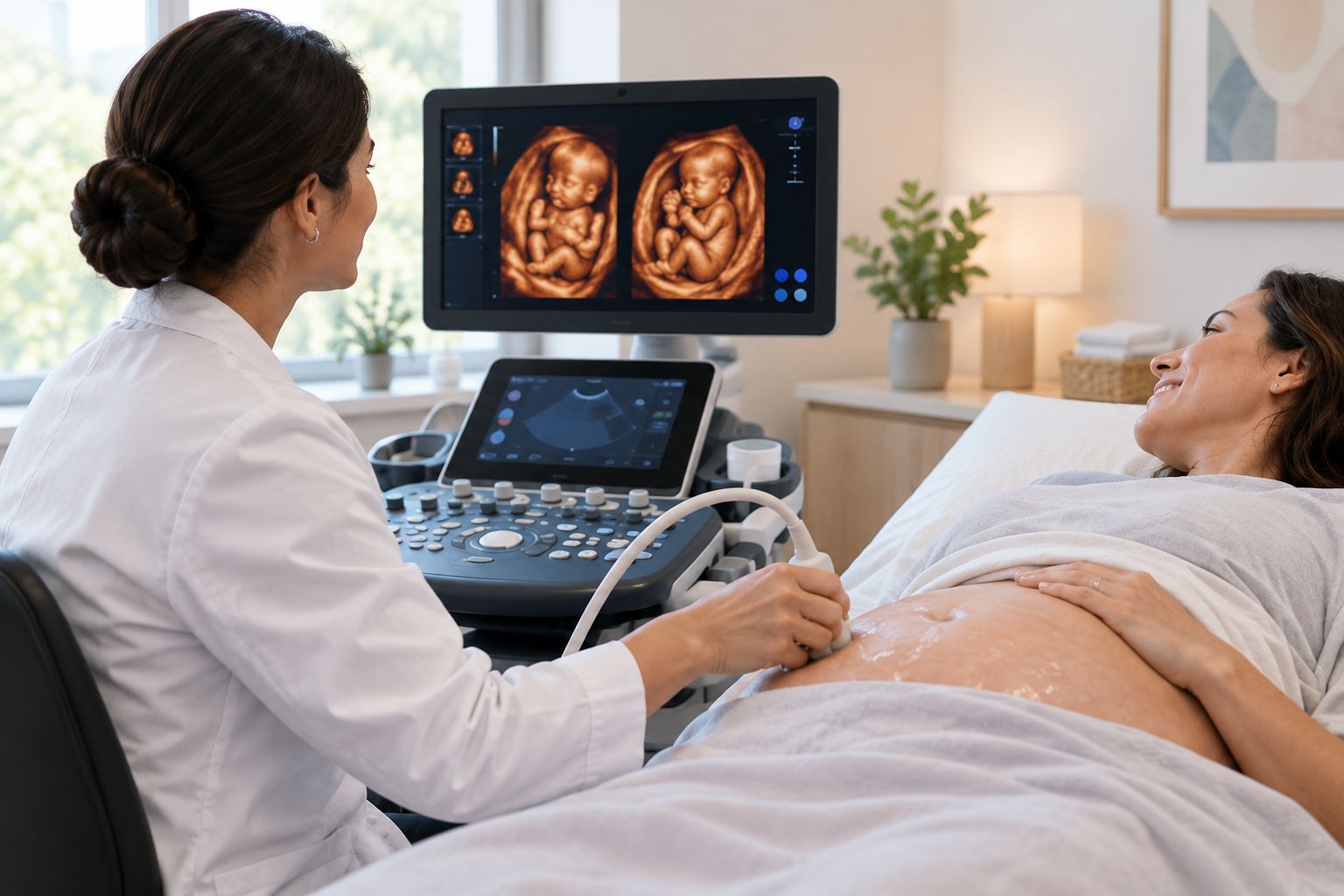
Twin pregnancy 3D/4D ultrasound is an elective imaging session covering both babies at once, with the aim of giving parents clear bonding images and an extra visual check on positioning between medical scans. Two babies sharing one uterus means less room, more overlap, and a narrower scheduling window than a singleton pregnancy ever has to deal with.
- Twin pregnancy 3D/4D ultrasound works best between 24 and 30 weeks, earlier than the 26-32 week window used for singleton scans.
- Confirm chorionicity and dating with your OB before booking an elective session — a keepsake studio scan is not diagnostic.
- Positioning decides image quality more than equipment: one twin blocking the other means rescheduling, not a better camera angle.
- The Ultrasound Concierge runs private twin sessions in Keller and Willow Park, TX with 8K rendering for sharper keepsake video.
Why 3D/4D ultrasound matters for twin pregnancies
A singleton anatomy scan has one baby to track. A twin scan has two — two heartbeats, two profiles, two sets of limbs that tend to tangle on the monitor right when you want a clean shot. That overlap is the single biggest difference between planning a twin session and a singleton one, and it's why timing and positioning questions matter more here than equipment specs.
Parents searching for ultrasound studios for twin pregnancies in Fort Worth are usually trying to solve the same problem: find someone who has actually scanned twins before, not just singleton pregnancies with a slightly longer appointment slot. A studio that treats a twin booking like a regular 3D/4D visit with extra minutes tacked on is going to struggle the moment one twin sits directly in front of the other.
The Ultrasound Concierge treats twin sessions as their own category of visit in the Keller and Willow Park, TX area — separate scheduling logic, separate expectations set with the family before the appointment starts. That distinction matters more than any single piece of imaging hardware.
Steps for planning a twin pregnancy 3D/4D ultrasound
Confirm chorionicity and dating first
Before you book anything elective, get the medical basics settled with your OB. This step is free and it changes everything downstream — timing, monitoring frequency, even whether a 3D/4D session makes sense yet.
- Ask whether the twins are monochorionic or dichorionic — it changes the monitoring schedule
- Confirm dating came from an early first-trimester scan, not a late guess
- Ask if a formal anatomy scan has already covered both babies
- Note if the twins share a placenta, since that affects growth tracking
- Ask your OB when they'd recommend an elective scan given your specific pregnancy
Time your session inside the twin-specific window
Twins run out of room faster than a single baby does, so the elective imaging window closes earlier. Most twin 3D/4D sessions land between 24 and 30 weeks in 2026, compared to the 26-32 week range typical for singleton pregnancies.
- Book earlier if one twin is already measuring on the smaller side
- Ask about amniotic fluid levels before locking a date
- Avoid waiting past 32 weeks — space for clear facial shots drops fast
- Check whether a recent growth scan already flagged discordance
- Build in a buffer week in case your OB wants an earlier delivery date confirmed first
Ask how the studio handles positioning for two babies
This is the question that actually predicts whether you'll get good images, not the marketing copy on a studio's homepage.
- Ask directly if the sonographer has experience scanning twins specifically
- Ask what repositioning tricks they use — bladder fullness, side-lying, short walks between passes
- Ask what happens if one twin blocks the other for the whole visit
- Confirm whether a second visit is offered or included if positioning doesn't cooperate
- Check that the scheduled scan length actually accounts for two subjects, not one
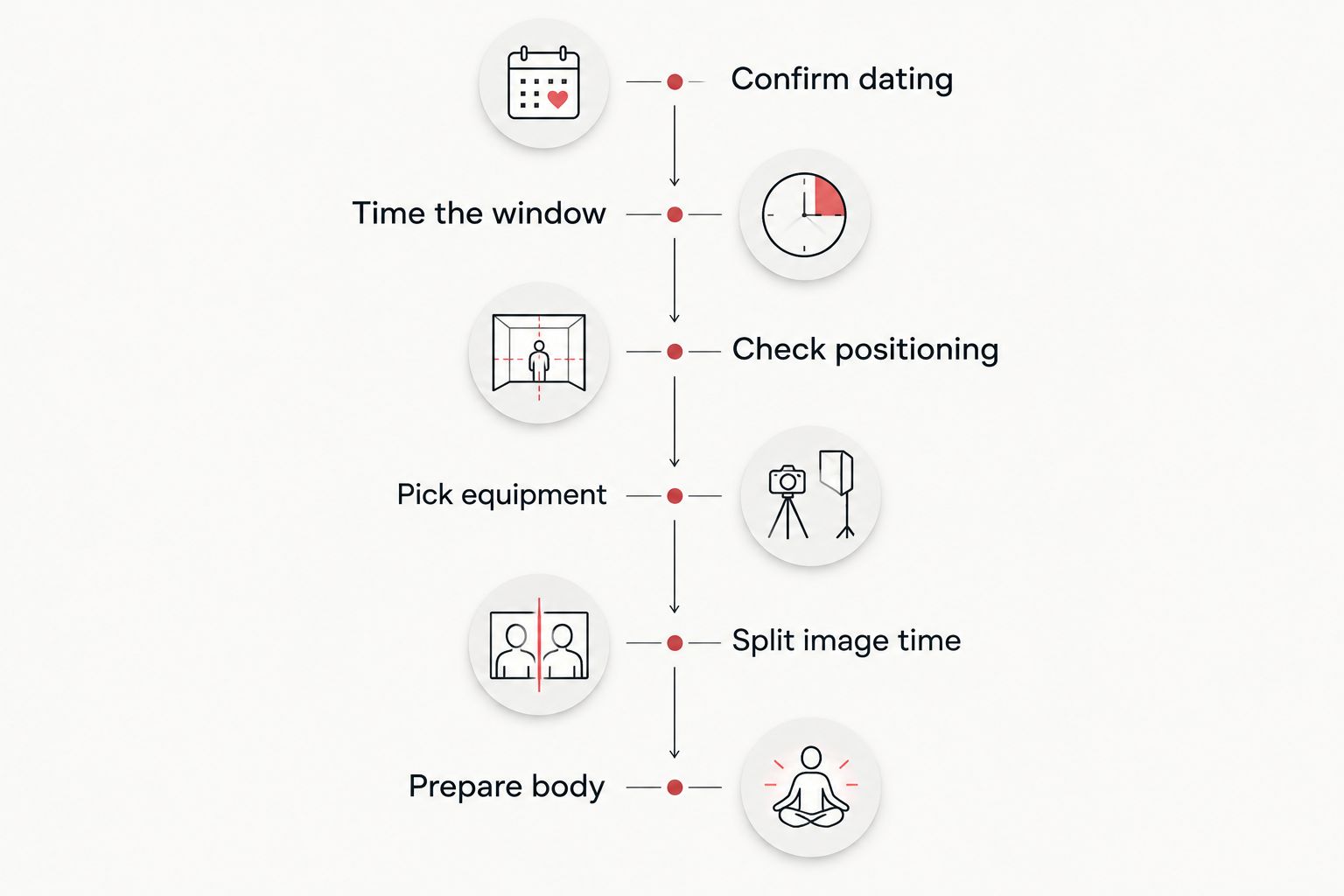
Pick imaging technology built to capture both babies clearly
Equipment matters, but only after the first three steps are handled. Higher-resolution rendering helps most when two faces are competing for the same frame.
- Ask what resolution the studio's 3D/4D equipment renders at
- Compare 3D/4D ultrasound studios ranked by 8K resolution if keepsake video quality matters to you
- Ask whether the studio adjusts lighting and angle settings per baby, not just once for the session
- Confirm the equipment is the same for both diagnostic checks and keepsake footage
- Ask if a preview screen lets you see each baby separately before the session ends
Decide how you'll split time and images between the twins
Without a plan, one twin often ends up with more usable footage than the other simply because they cooperated first.
- Ask for separate keepsake photos captured for each baby, not just a combined shot
- Request individual profile stills in addition to any split-screen images
- Decide in advance who gets the first pass if only one twin is positioned well early on
- Ask about total video length and whether it's split evenly
- Confirm you'll leave with labeled files or prints for each baby, not one mixed set
Prepare your body and schedule for a longer twin session
A twin scan runs longer than a singleton one almost every time, so treat the prep differently.
- Hydrate more than you would for a standard scan — fluid helps visibility for two babies
- Eat a light meal beforehand to encourage fetal movement
- Wear loose clothing you can adjust without leaving the room
- Bring a second support person if you want, since sessions run longer
- Plan bathroom timing around the appointment, not just before it
Book a private twin ultrasound session
Sessions in Keller and Willow Park, TX built around twin positioning and timing.
Comparison: where twin families get elective 3D/4D imaging
| Option | Best for | Key limitation |
|---|---|---|
| OB or clinic anatomy scan | Chorionicity confirmation, growth-discordance monitoring | Short, diagnostic-only visit — no keepsake video |
| Chain elective imaging center | Families wanting a quick, low-frills 3D scan | Less consistent experience scanning two babies |
| Private concierge studio (in-home or private suite) | Families wanting a longer, twin-specific session with privacy | Fewer locations, book further ahead |
| Boutique studio in a retail center | Walk-in convenience, no advance planning needed | Shared waiting areas, standard equipment across all bookings |
Verdict: the OB scan is not optional and covers the medical side; a private concierge session is the better fit for the keepsake and bonding side of a twin pregnancy in 2026 because the appointment length and sonographer attention are built around two babies instead of one.
“If one twin is head-down and blocking the other, no camera angle fixes that — you reschedule.”
Common mistakes twin parents make when booking
- Booking a singleton-length appointment slot. Twin sessions need more time; a 20-minute slot built for one baby leaves no room for repositioning two.
- Skipping the OB confirmation of chorionicity. Elective studios image what they see — they don't replace the medical scan that determines your monitoring schedule.
- Assuming both twins will get equal footage automatically. Ask for it explicitly, or one baby ends up with far less usable video.
- Waiting past 32 weeks to book. Space for clear facial images shrinks fast once twins run out of room to move.
- Choosing a studio based on price alone without asking about twin experience. A sonographer who has never scanned twins will lose time to positioning problems a specialist would have anticipated.
FAQ
What is the best time for a 3D/4D ultrasound with twins?
The recommended window for twin pregnancy 3D/4D ultrasound is 24 to 30 weeks in 2026, earlier than the 26-32 week window for singleton scans, because twins run out of room to move sooner.
Is a twin 3D/4D ultrasound different from a singleton one?
Yes. Twin sessions run longer, need a sonographer experienced with two subjects overlapping in one frame, and require a plan for splitting images and video time between both babies.
Can I get separate keepsake photos of each twin?
Ask for this before booking. Some studios default to combined shots unless you request individual profile stills and separate video segments for each baby.
Does a 3D/4D studio scan replace my OB anatomy scan?
No. A keepsake 3D/4D session is elective and not diagnostic. Chorionicity, growth discordance, and fluid levels still need confirmation from your OB.
Why can't I see one of my twins clearly on the ultrasound?
One twin is likely positioned in front of the other from the sonographer's angle. Repositioning, a short walk, or a second visit usually resolves it — equipment resolution doesn't fix a blocked view.
What resolution should I look for in a twin ultrasound studio?
Higher-resolution rendering, including 8K options, helps most when capturing two faces in one session. Compare studios by resolution if keepsake video quality is a priority.
How long does a twin 3D/4D ultrasound session take?
Plan for a longer appointment than a singleton scan. Two babies, repositioning time, and separate image capture all add minutes a single-baby session doesn't need.
Where can I book a private twin ultrasound near Keller or Willow Park, TX?
The Ultrasound Concierge offers private twin pregnancy sessions in the Keller and Willow Park, TX area with scheduling built around two babies rather than one.
One last thing
The detail most parents skip: ask the studio what happens if the session ends and one twin still didn't cooperate. A studio with a clear rebooking policy for that exact situation has almost certainly scanned twins before — a studio that seems surprised by the question probably hasn't.