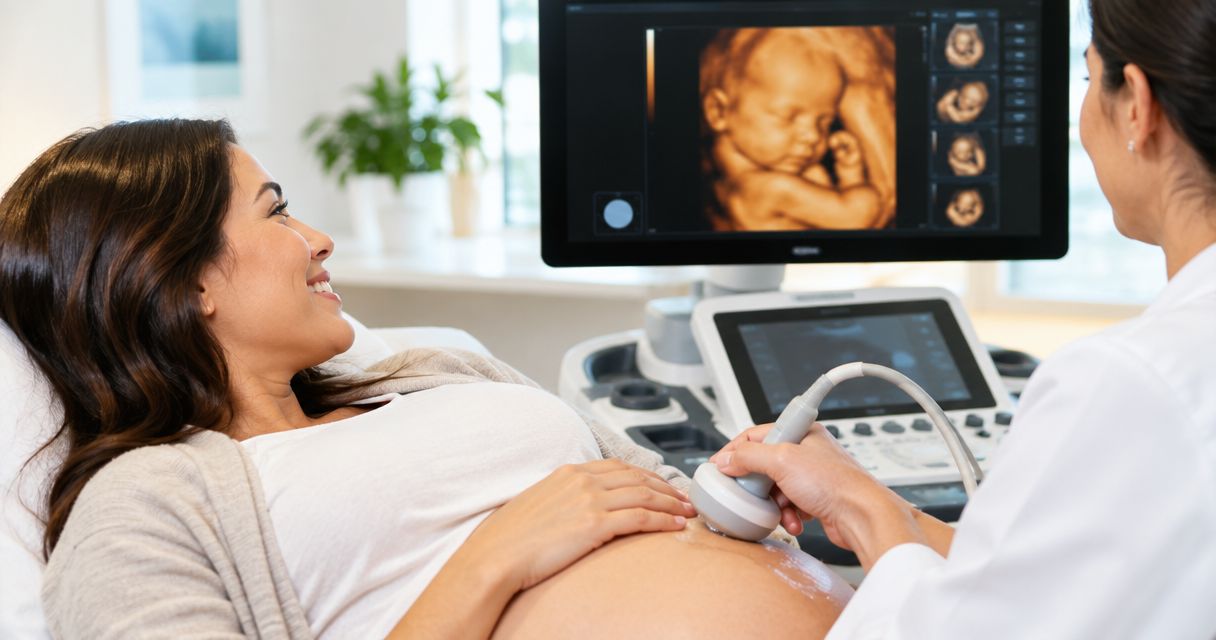

Ultrasound referrals for OB practices are the process of directing a patient to an outside provider for a scan the practice doesn't need to perform itself — elective 3D/4D imaging, a reassurance scan between diagnostic visits, or overflow capacity when the in-house sonographer's calendar is full. Done with a clear protocol, the referral protects the physician's schedule and gives the patient a documented reason to choose where she gets a nonmedical or supplemental scan in 2026.
- Ultrasound referrals for OB practices work best when elective scans (3D/4D, gender reveal, reassurance) route to a private studio like The Ultrasound Concierge, keeping diagnostic scans in-house.
- Vet any referral provider on sonographer credentials, physician oversight, and how fast results route back to the chart.
- A written referral protocol for front-desk staff cuts the back-and-forth that slows a busy OB schedule.
- The most common mistake in 2026 is referring anxious patients out without telling them what the scan will and won't diagnose.
Why ultrasound referrals matter for OB practices
Most OB schedules in 2026 are built around diagnostic studies — dating scans, anatomy scans, growth scans, biophysical profiles. Those slots are billed, physician-ordered, and clinically necessary. Elective requests (a keepsake 3D/4D image, a gender reveal appointment, a reassurance heartbeat check between visits) compete for the same sonographer time without needing to.
Sending those requests to The Ultrasound Concierge or a comparable private studio frees the in-house sonographer for the scans that actually require a physician's interpretation. It also gives anxious patients a calmer, less clinical setting for a scan that isn't diagnostic in the first place — which is the entire premise behind concierge ultrasound as a category.
The risk runs the other direction too. A practice that refers everything out, including scans that need a documented diagnostic read, loses continuity of care and creates gaps in the chart. The fix isn't refusing to refer — it's knowing exactly which scans belong outside the practice and which don't.
Build the referral pathway step by step
A referral pathway for ultrasound requests doesn't need software or a formal contract. It needs six decisions made once, written down, and followed by whoever answers the phone.
Separate elective scans from diagnostic scans before you refer anyone
Start by drawing the line your front desk will use every time a patient asks about an extra ultrasound.
- Dating, anatomy, growth, and BPP scans stay in-house — they're physician-ordered and diagnostic.
- 3D/4D keepsake imaging is elective and a reasonable referral.
- Gender reveal appointments and SneakPeek-style gender tests are elective, not diagnostic.
- Reassurance heartbeat checks between scheduled visits are elective unless the patient reports a specific symptom.
- Any request tied to bleeding, pain, or reduced movement stays in-house or goes to urgent diagnostic imaging, never to an elective provider.
Vet the referral provider's credentials and physician oversight
Don't hand a patient a phone number you haven't checked yourself.
- Confirm who performs the scan — a registered sonographer, not an unlicensed technician.
- Ask what happens if the sonographer sees something outside the scope of an elective scan.
- Ask how records and images are stored and for how long.
- Confirm the provider understands Texas patient consent and disclosure practices for ultrasound results.
- Ask about equipment quality if the referral is for 3D/4D or 8K rendering — image quality varies widely between studios.
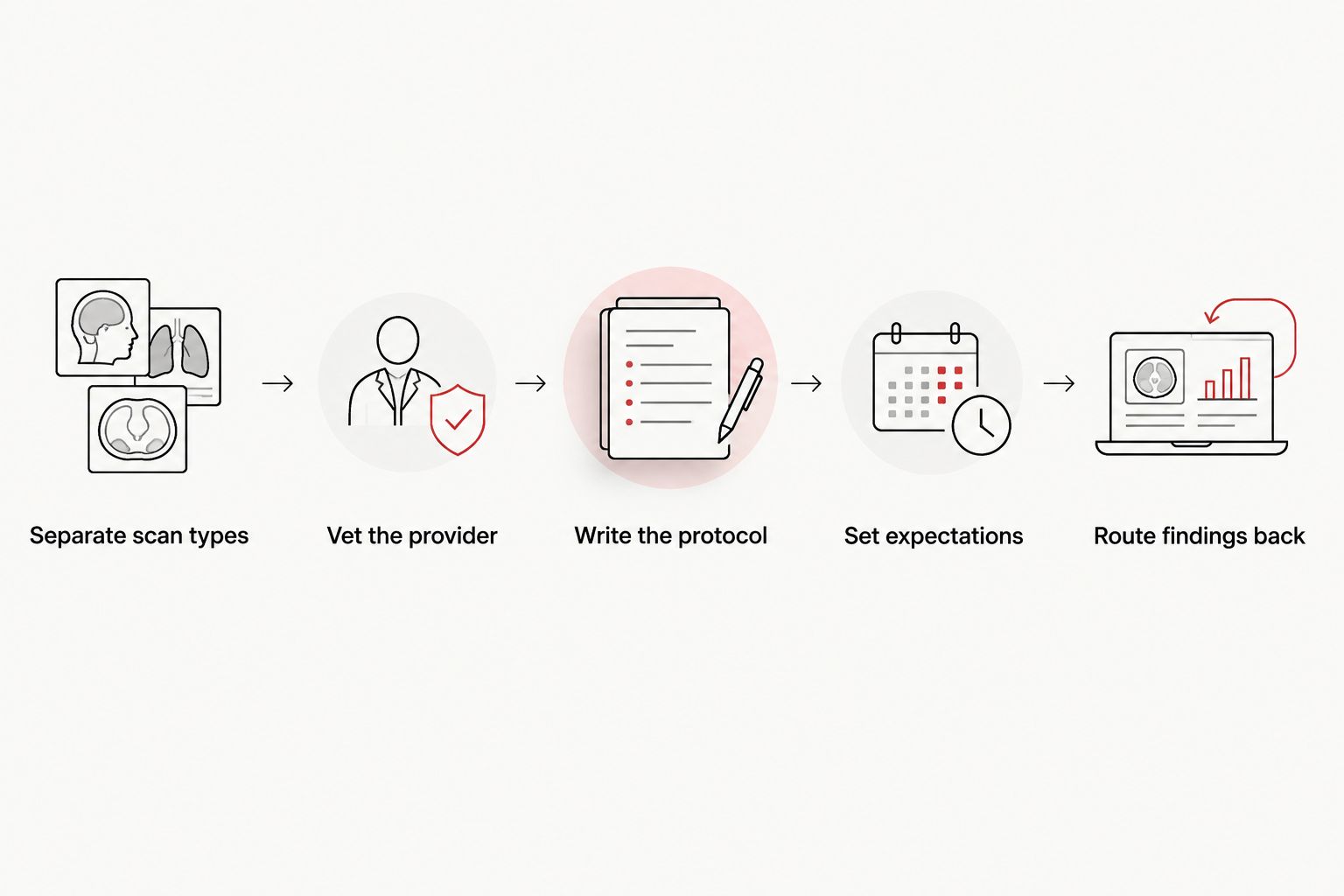
Write a one-page referral protocol for the front desk
Whoever answers the phone needs a script, not a judgment call.
- A short list of vetted providers, sorted by scan type (elective vs. diagnostic overflow).
- A one-line script for explaining why the practice refers certain scans out.
- A printed handout the patient can take home with contact information.
- A fax or secure-message template for sending relevant chart notes to the referral provider.
Tell the patient what the elective scan will not do
Set the expectation before she books the appointment, not after.
- An elective 3D/4D or gender-reveal scan is not a substitute for the anatomy scan.
- Gender results from an elective scan or a SneakPeek-style test aren't a diagnostic finding.
- Any incidental concern found during an elective scan gets referred back to the practice, not treated on-site.
- Turnaround for keepsake images or prints depends on the studio, not the practice.

Confirm how results and incidental findings route back to your chart
A referral without a return path is a dead end for the patient's record.
- Get a signed release before the referral so records can move both directions.
- Set a direct line — fax, portal upload, or secure email — for the provider to send reports.
- Establish a same-day call-back policy for anything the sonographer flags as urgent.
- Document the referral and its outcome in the EMR, not just in a sticky note at the front desk.
Track referral outcomes each quarter
A protocol only works if someone checks whether it's working.
- No-show rate for referred appointments.
- Patient feedback on the referral experience.
- Turnaround time between the scan and the report reaching your office.
- Repeat referrals to the same provider versus one-off requests.
Partner on elective ultrasound referrals
Route 3D/4D, reassurance, and gender-reveal requests to a private studio built for elective scans.
Referral options compared
| Option | Best for | Key limitation |
|---|---|---|
| Hospital-based imaging center | Complex diagnostic referrals needing full radiology backup | Longer wait times, clinical setting |
| Freestanding diagnostic imaging center | Routine diagnostic overflow | Brief appointment windows |
| Private/concierge ultrasound studio | Elective 3D/4D, reassurance, and gender-reveal referrals | Not built for physician-ordered diagnostic interpretation |
| Mobile/in-home sonographer | Bedrest or travel-limited patients | Availability varies by provider |
Verdict: for elective and reassurance referrals in the Keller and Willow Park, TX area, a concierge diagnostic ultrasound provider in North Texas is the closer fit than a hospital slot the patient will wait weeks for.
Common mistakes OB practices make with ultrasound referrals
- Referring anxious patients to whichever studio ranks first on Google, instead of a vetted list the practice has already checked for credentials.
- Not telling the patient an elective scan isn't a diagnostic substitute for her next scheduled visit — this creates confusion when results don't match expectations.
- No process for incidental findings to reach the chart, which leaves a gap in the record if the referral provider sees something unexpected.
- Sending diagnostic overflow to a studio that only performs elective scans, which wastes the patient's appointment and delays the diagnostic study she actually needs.
- Treating the referral list as a one-time decision instead of reviewing it yearly as providers open, close, or change scope.
“A referral without a written protocol is just a phone number taped to the front desk.”
A practice that reviews its referral list once a year — checking which providers are still operating, still doing the same scan types, and still returning reports on time — avoids most of the problems above before they reach a patient.
FAQ
What's the difference between a diagnostic and an elective ultrasound referral?
A diagnostic scan is physician-ordered and used to evaluate a medical question — dating, anatomy, growth, or a biophysical profile. An elective scan, like a 3D/4D keepsake image or gender reveal appointment, isn't ordered for a medical reason and can safely be referred to a private studio.
Can an OB practice refer a patient for a 3D/4D ultrasound?
Yes. A 3D/4D or 8K keepsake scan is elective, not diagnostic, so OB practices in 2026 commonly refer these requests to a concierge or private ultrasound studio instead of scheduling them in-house.
Who reviews the images at a private ultrasound studio?
This varies by provider — ask directly whether a registered sonographer performs the scan and what happens if something outside the elective scope appears on the images before referring any patient there.
Is a SneakPeek-style gender test a substitute for the anatomy scan?
No. A SneakPeek Gender Test or similar early gender test gives a result, not a diagnostic evaluation, so the patient still needs her scheduled anatomy scan regardless of the result.
How do OB practices in Keller and Willow Park, TX handle overflow ultrasound requests?
Practices in the area typically split requests by type: diagnostic overflow goes to a freestanding imaging center, and elective requests — reassurance scans, gender reveals, keepsake imaging — go to a private studio like The Ultrasound Concierge.
What should a referral protocol include?
A one-page protocol should list vetted providers by scan type, a script for front-desk staff, a signed-release process, and a defined path for results and incidental findings to return to the chart.
What happens if a private ultrasound studio finds something abnormal?
A vetted elective provider should have a stated protocol for referring the patient back to her OB practice immediately rather than attempting to interpret or manage the finding on-site.
Does referring elective scans out reduce liability for the OB practice?
Referring elective, nonmedical scans to a separate provider keeps the practice's diagnostic record focused on physician-ordered studies, but a signed release and a documented referral protocol matter more for continuity of care than liability alone.
One last thing
The practices that get the fewest complaints about referrals aren't the ones with the longest vetted list — they're the ones that tell the patient, in plain language, what the elective scan is for and what it isn't before she ever books it. That single sentence at check-out prevents most of the confusion that shows up as a phone call to the front desk two weeks later.